
.png)
Grab the full download below—perfect for saving or sharing with your team.

As software licensing continues to evolve, software publishers are increasingly aware that their success is closely tied to the success of their customers.
For many years, software publishers and their trusted partners have been conducting consumption assessments. The objective of these assessments is to provide customers with comprehensive information and guidance on how to optimize their spend and realize the actual value of their software investment. By offering this valuable support from the outset and maintaining a customer-focused approach, long-term success can be achieved throughout the entire contract lifecycle.
However, there is a potential conflict of interest when licensing education programs are offered alongside software audits conducted by the publisher. All intellectual property owners recognize the importance of safeguarding their IP; nevertheless, the complexity of IT estates has risen in recent years due to the emergence of cloud and hybrid environments. Consequently, Software Asset Management (SAM) teams have grown increasingly challenged to stay on top of use rights and restrictions of complex publisher agreements. This situation has spurred a rise in the market for software assessments, often carried out by companies claiming expertise in vendors' products without proper certification.
To fully understand the impact that publishers can add, it is essential that they ask themselves “how can we add value to the customer journey and improve their success?”. As IT environments become more complex, most publishers have invested more into dedicated licensing teams that specialize in customer education programs. Often the primary purpose of these teams is to educate customers on the benefits of understanding adoption and product usage and helping customers optimize their license spend. This valuable service helps customers to gain the full benefits from their purchase and allows publishers to assess areas where customers may be struggling to identify use cases or underutilizing product features.
If end users are employing third parties to perform these assessments, there needs to be a self-reflection from publishers as to why? As many vendors work towards regaining trust and building a better relationship when it comes to the services they offer, operating with a customer first approach to gain trust has become essential.
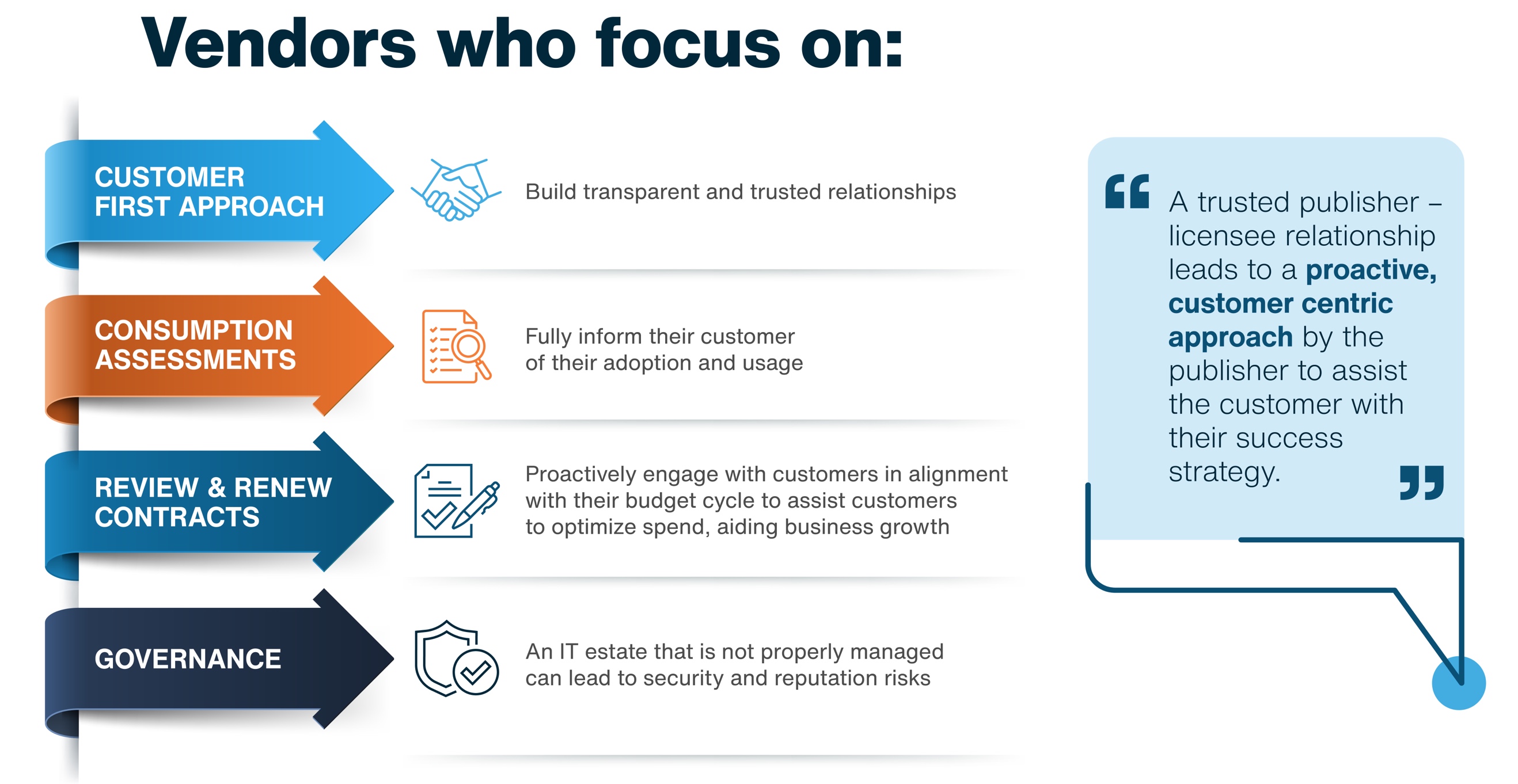
For software publishers to advance their licensing services and achieve genuine success, they must effectively collaborate with technical users, SAM teams, procurement, and executives, outlining the comprehensive value they can provide. Granting C-level executives sufficient time to grasp the advantages of these services is crucial, as it helps mitigate the risk of unplanned expenses. Additionally, with a better partnership there is a reduced likelihood of disruptive software audits which can further lead to cost savings, stemming from a clearer comprehension of complex contracts and licensing metrics. Moreover, leveraging usage assessments can enhance the accuracy of renewal purchases, optimizing the entire software licensing process.
At Connor, we recognize that traditional License Compliance can no longer be the only go to market approach. Modernization now extends to providing incremental compliance benefits, value for end users in the process. This allows an expansion of licensing services to partner with other areas in the organization such as Customer Success, Renewals, Cloud, and Partner Management ensuring the customer is always at the center of the approach.
If you are a software compliance specialist and are interested in attending our next event’s or you would like to further understand our business offerings, please reach out to rebecca@connor-consulting.com.